
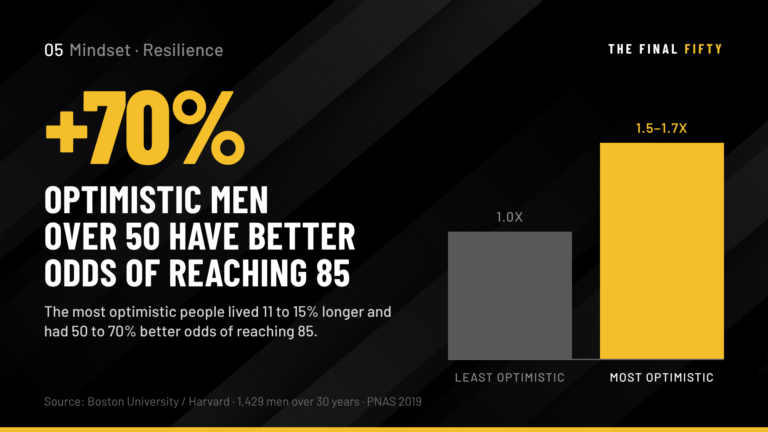
Resilience After 50: Why the Ability to Absorb and Recover From Hard Things Is a Skill Worth Building

The second half of a man's life does not reduce adversity. It changes its character. The physical challenges that were acute in the first half become chronic in the second. The professional setbacks that once felt temporary become more consequential when there are fewer decades to recover the ground. The relational losses that accumulate across...

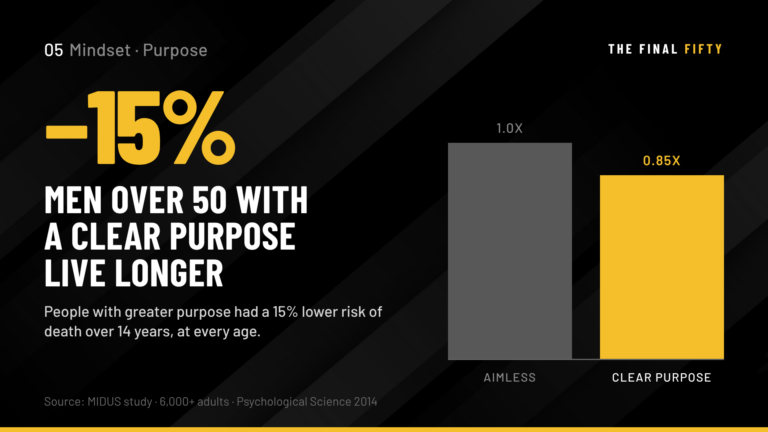
Purpose After 50: Why Men Who Know Why They Are Building Outlast and Outperform the Men Who Do Not
Two men are training. Same age, same program, same gym. One is training to maintain his health because his physician told him he should. The other is training because he has a specific vision of who he intends to be at seventy, because that vision is connected to the contribution he is making to the...

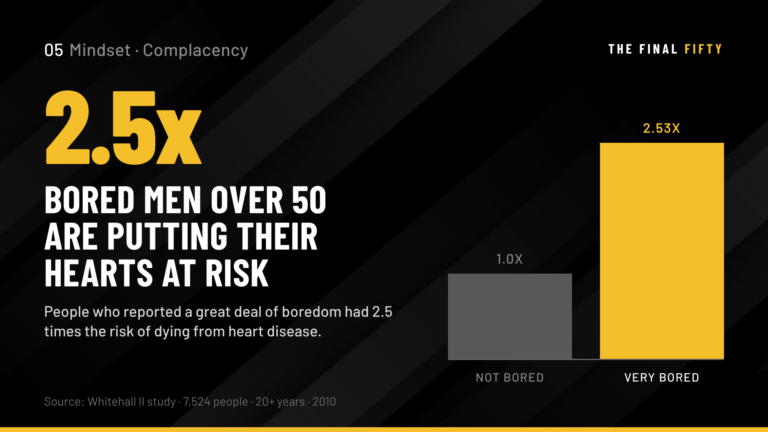
Complacency After 50: How It Arrives Quietly and What Men Need to Do to Stop It Before It Settles In
Complacency does not arrive with an announcement. It does not announce itself as a decision or present itself as a choice a man made. It arrives gradually, wearing the disguise of other things: reasonable accommodation of a full schedule, earned rest after decades of hard building, mature perspective that no longer needs to prove anything,...

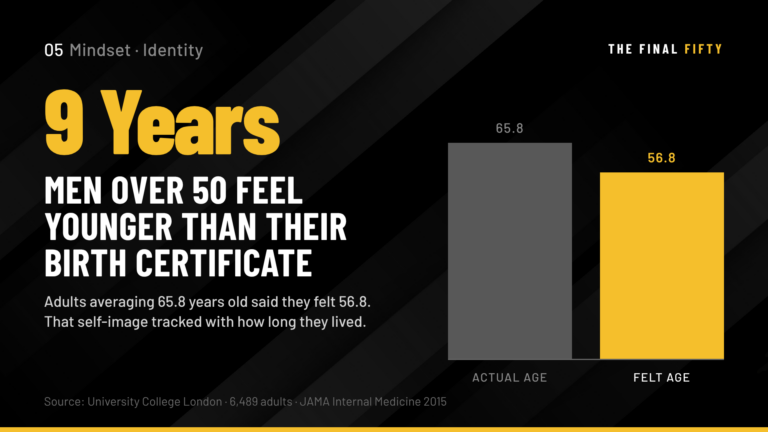
Identity After 50: Why What You Believe About Yourself Is the Most Important Variable in Your Performance
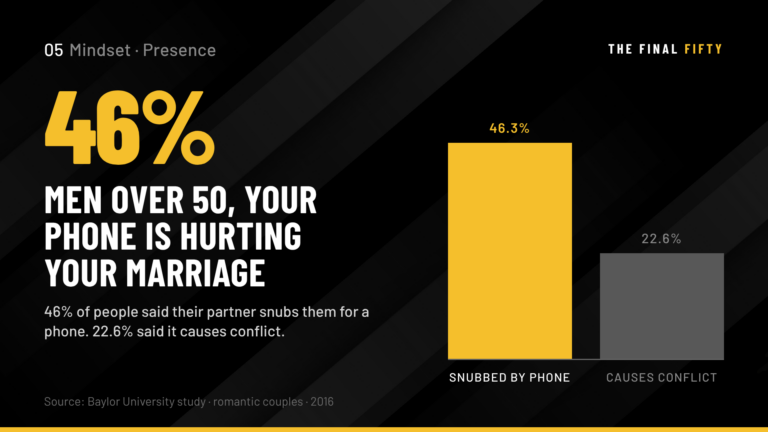
There is a hierarchy of variables that determine a man's health outcomes, performance trajectory, and quality of life in the second half. Most men would organize that hierarchy by placing the visible, measurable inputs at the top: training consistency, nutritional quality, sleep adequacy, stress management. These are the variables that receive the most deliberate attention...

Presence After 50: Why the Ability to Be Fully Here Is One of the Rarest and Most Valuable Things a Man Can Develop
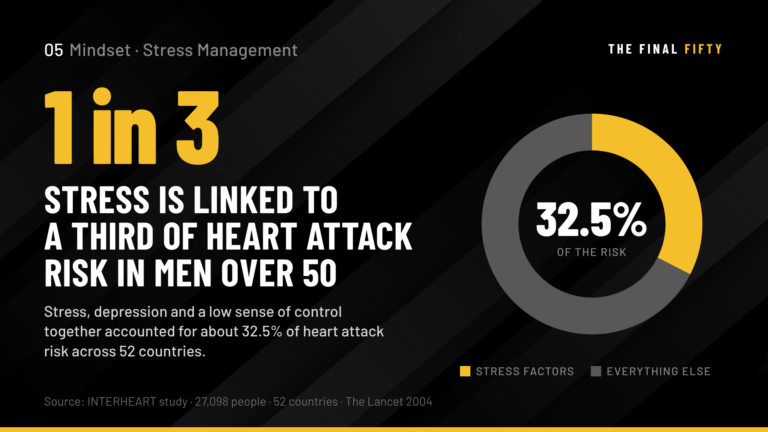
The man over fifty who has built a serious life has developed dozens of legitimate capabilities. He can manage complex situations. He can hold a strategic view across competing demands. He can assess risk with calibration that comes only from having navigated real outcomes across decades. He has accumulated expertise, judgment, and the kind of...

The Physical Cost of Chronic Stress on Men Over 50 and How to Stop Paying It
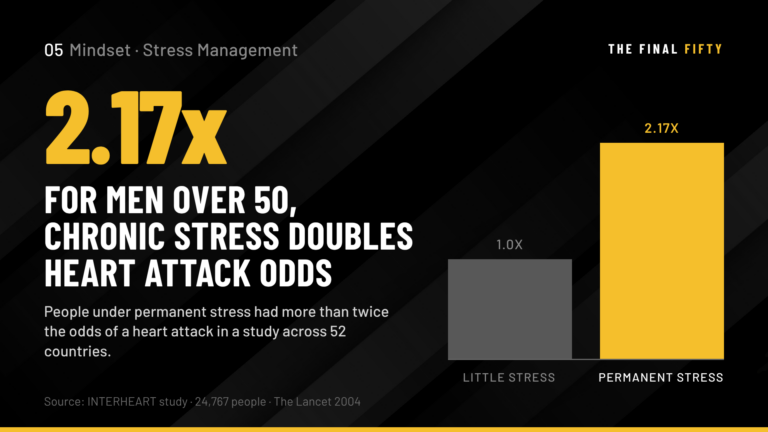
The story most men tell about their stress is a psychological one. They are stressed because of the demands at work, the pressures at home, the complexity of managing a life at full capacity in the second half. They feel it as anxiety, irritability, mental fatigue, difficulty concentrating. They address it, when they address it...

Stress Management for Men Over 50: Why the Strategies That Worked at 35 Are Not Enough Anymore
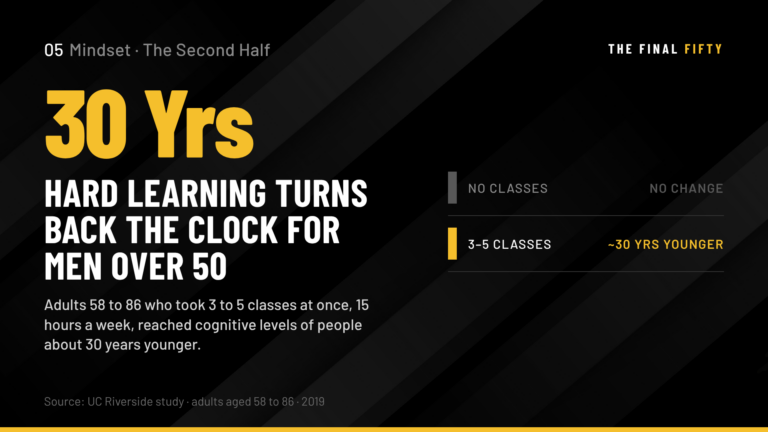
The man at thirty-five who was under significant stress had a reasonably effective recovery system. Push hard for two weeks, take a long weekend, sleep it off, get back at it. The body absorbed the stress, cleared the cortisol, and returned to baseline with a reliability that felt biological because it was. The recovery was...

How Men Over 50 Build a Second-Half Mindset That Is Stronger Than the One That Got Them Here
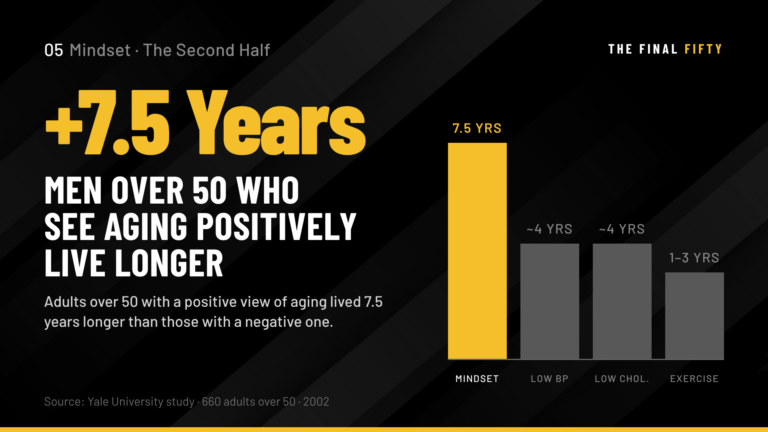
The mindset that built the first half of a man's life was designed for a specific purpose. It was built for construction. For accumulation. For proving something to the world and to himself. It ran on external metrics: the promotion earned, the deal closed, the body built, the status accumulated, the milestone reached. It was...

The Mindset Shift Every Man Over 50 Needs to Make to Stop Treating This Stage as a Slowdown

The story the world has written for men at fifty is almost entirely about subtraction. Subtract the physical performance. Subtract the ambition. Subtract the hunger that drove the first half and replace it with something called perspective, which is what wisdom looks like when it stops competing. Subtract the expectation of building anything significantly new....