
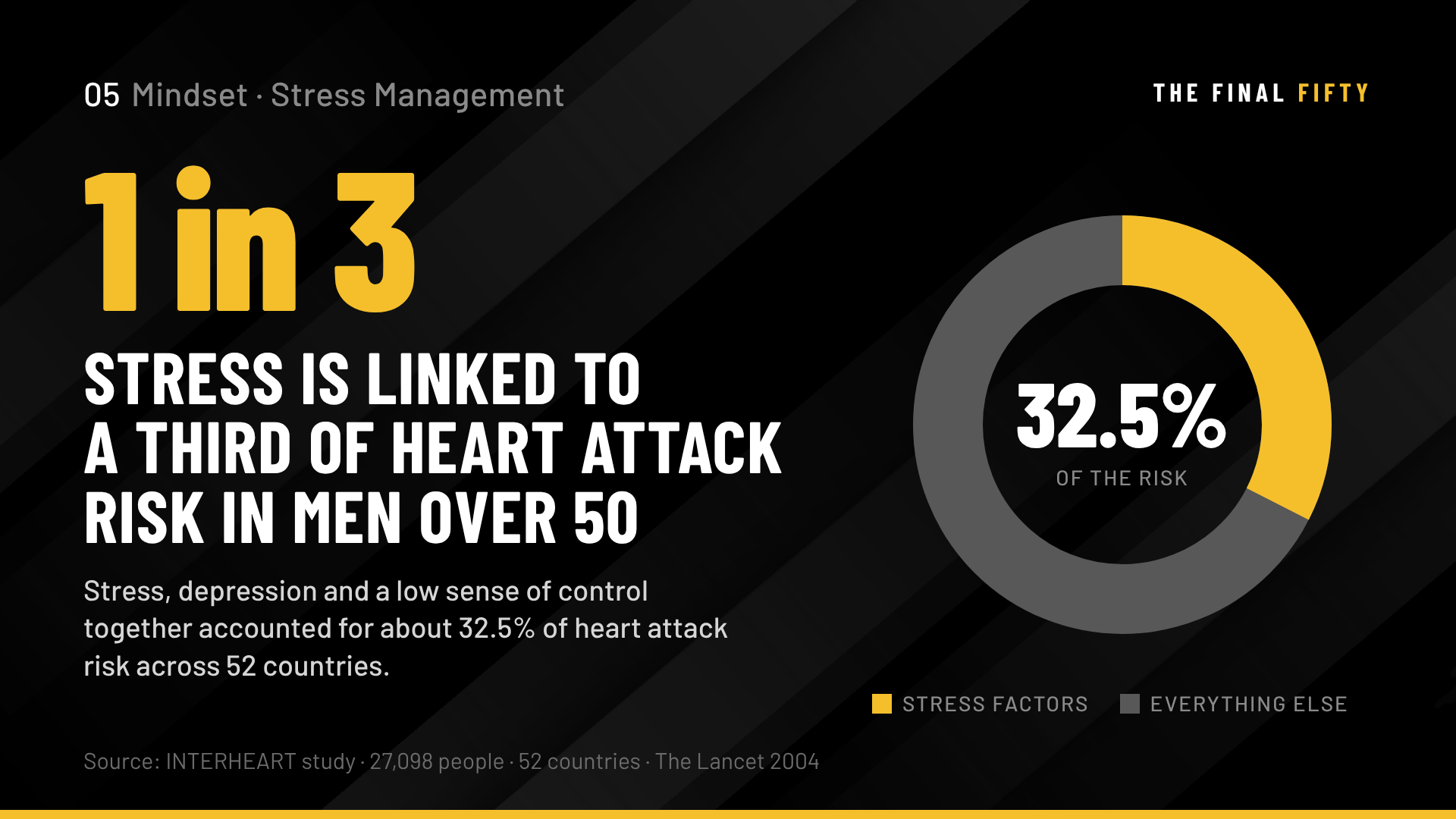
The story most men tell about their stress is a psychological one. They are stressed because of the demands at work, the pressures at home, the complexity of managing a life at full capacity in the second half. They feel it as anxiety, irritability, mental fatigue, difficulty concentrating. They address it, when they address it at all, through psychological means: talking about it, thinking through it, occasionally seeking professional support.
What most men are not tracking is what the stress is doing to their body while they are managing it psychologically. The physical cost of chronic stress in men over fifty is not a secondary effect of the mental burden. It is a primary biological process, running simultaneously with whatever emotional experience the stress produces, and it is measurable, progressive, and in some cases irreversible if allowed to accumulate without deliberate intervention.
The man over fifty who has been under sustained stress for years, who has managed the psychological experience with varying degrees of success, but who has never specifically addressed the physical biology of chronic cortisol elevation is paying a price that shows up in his cardiovascular system, his muscle mass, his immune function, his bone density, and his hormonal health. He is paying it whether he knows it is being charged or not. And the bill compounds interest across every year the root cause goes unaddressed.
Understanding what is happening physiologically is the beginning of being able to stop it.
The Mechanism: What Chronic Cortisol Does to the Body
The stress response was designed for acute threats. The predator, the physical confrontation, the immediate crisis that demands a response and then resolves. In those contexts, the cortisol release is appropriate, functional, and temporary. The cardiovascular system is mobilized, glucose floods the bloodstream for immediate energy, the immune system is temporarily downregulated to redirect resources toward the immediate threat, and when the threat resolves, the system returns to baseline.
Modern stress does not resolve. The work pressure, the financial complexity, the relationship strain, the ambient demands of a high-output life in the second half do not have a natural conclusion that signals the HPA axis to stand down. The cortisol keeps coming. The system stays activated. And the biological processes that were designed to support a brief adaptive response become sustained processes that damage the systems they were meant to protect.
Chronic stress impacts every major body system. Persistent high blood pressure damages arterial walls, accelerates atherosclerosis, and significantly increases heart attack and stroke risk. Constant muscle tension leads to chronic pain syndromes. Even when managing seven to eight hours of sleep, chronic stress reduces the restorative architecture of that sleep. Chronic stress also increases systemic inflammation, which plays a role in many chronic illnesses. The body is designed to handle acute stress, but it is not built to remain in a continuous state of alarm. When stress becomes chronic, the cumulative wear and tear, often referred to as allostatic load, begins to show in measurable physical symptoms.
Allostatic load is the term researchers use to describe the accumulated biological cost of sustained stress adaptation. It is not metaphorical. It is a composite measure of physiological dysregulation across multiple systems, including blood pressure, cortisol levels, inflammatory markers, blood glucose, and body composition. Men with high allostatic load are at significantly elevated risk for cardiovascular disease, metabolic syndrome, cognitive decline, and earlier mortality. And allostatic load increases with age in a way that makes chronic stress progressively more expensive in the second half of life than it was in the first.
The Cardiovascular Cost
The relationship between chronic stress and cardiovascular disease is among the most robustly documented in the scientific literature. It is not a correlation of uncertain causality. It is a documented biological pathway from sustained cortisol elevation to arterial damage to clinical cardiovascular events.
Both men and women are more likely to suffer a heart attack after multiple divorces, with divorce being one of the most reliable markers of sustained psychosocial stress. Research has established that experiencing multiple categories of psychological stress increased the risk of cardiovascular disease. People suffering from stress who develop hypertension and an elevated heart rate are more likely to have a heart attack.
The mechanism is specific. Maladaptive responses to persistent long-term stressors affect the inflammasome, the metabolome, immune function, and vascular function sufficiently to ignite a precipitation of noxious events. Chronic stress activates inflammatory pathways that damage arterial walls. It elevates blood pressure through sustained sympathetic nervous system activation, contributing to the arterial stiffness that increases stroke and heart attack risk. It raises circulating glucose through cortisol-driven gluconeogenesis, contributing to insulin resistance and the metabolic cascade that accelerates cardiovascular disease.
For men over fifty who are already navigating age-related increases in cardiovascular risk, the additive effect of chronic stress on top of the normal aging trajectory is not minor. The man who is training consistently, eating well, and managing most of his health variables effectively but carrying high sustained stress is not neutralizing the cardiovascular risk that his lifestyle is trying to protect against. He is running one of the most powerful cardiovascular risk factors without management while optimizing everything else around it.
The Muscle Cost
This is the physical cost of chronic stress that most men have never been told about, and it is the one that most directly undermines everything the second half training investment is trying to build.
Cortisol is the primary catabolic hormone. It exerts an opposite effect to testosterone, insulin, and growth hormone, decomposing muscle tissue and causing or accelerating sarcopenia. Chronic stress induces muscle atrophy via elevated cortisol and activation of major proteolytic degradation pathways. Inflammatory pathways play key roles in stress-induced muscle degradation.
The persistence of mild cortisol excess is associated with a reduction in muscle strength and mass, poor physical performance, and the presence of sarcopenia. In humans, cortisol increases with age and with chronic stress, and its catabolic effect on skeletal muscle is mediated through glucocorticoid receptors that, when activated, promote protein degradation and inhibit protein synthesis simultaneously.
Catabolic hormones such as cortisol can accelerate age-induced muscle atrophy, as they are involved in muscle wasting and their levels increase with age. This is the compounding dynamic that makes chronic stress particularly destructive for men over fifty. The normal age-related increase in cortisol is already working against the muscle maintenance the second half requires. Chronic stress elevates cortisol further, on top of the age-related baseline, producing an additive catabolic environment that outpaces what training and protein intake can overcome if the stress is severe and sustained enough.
The man who is training hard, hitting his protein targets, and managing his sleep but running high chronic stress is fighting his own cortisol with every effort he makes to build or maintain muscle. The training stimulus is present. The protein is present. The anabolic environment is partially suppressed by the cortisol load the stress is maintaining. His training is working against a headwind that the stress is generating.
The Immune Cost
The immune system operates in direct opposition to the stress response. When the HPA axis is activated and cortisol is elevated, the immune system is suppressed. This trade-off made evolutionary sense when the stressor was a predator and the immune suppression was brief. When the stressor is chronic and the immune suppression is sustained, the trade-off produces compounding immune dysfunction.
Chronic stress increases pro-inflammatory cytokines, disrupts immune balance, and aggravates autoimmune diseases. It also contributes to conditions such as Alzheimer’s, asthma, cancer, coronary artery disease, and multiple other chronic illnesses. Diseases whose development has been linked to both stress and inflammation include cardiovascular dysfunctions, diabetes, cancer, autoimmune syndromes, and mental illness such as depression and anxiety disorders.
The immune aging that stress accelerates is particularly relevant for men over fifty because the immune system is already operating with reduced reserve capacity after decades of activation and response. A younger man’s immune system has developmental resources and redundancy that allow it to absorb some degree of chronic stress-driven dysregulation without immediate clinical consequences. The immune system of a man over fifty does not have the same margin. The stress-driven immune suppression that was manageable at thirty-five produces measurable vulnerability to infection, impaired wound healing, and accelerated disease progression at fifty-five.
The Bone Cost
Chronic stress and elevated cortisol exert a specific and rarely discussed effect on bone density that becomes increasingly relevant for men in the second half of their lives. Chronic stress significantly affects cardiovascular health and bone resorption through immunological and endocrine mechanisms. The relationship between psychological stress and loss of bone density occurs due to the reduction in the number of osteoblasts and loss in the balance between physiological bone formation and resorption.
Cortisol increases osteoporosis risk through multiple pathways simultaneously: it reduces calcium absorption in the gut, increases calcium loss through the kidneys, reduces the activity of osteoblasts that build new bone, and increases the activity of osteoclasts that break it down. The cumulative effect of sustained cortisol elevation on bone density over years produces measurable losses that compound the normal age-related bone density reduction that all men navigate after fifty.
The man who is training with impact and loading that builds bone but who is simultaneously running high chronic stress has the bone-building stimulus partially neutralized by the cortisol environment that promotes bone resorption. This is yet another domain where unmanaged stress works directly against what the training investment is trying to produce.
How to Stop Paying the Physical Cost
The distinction this article draws is important: the physical cost of chronic stress is not managed by psychological intervention alone. The biology requires biological inputs directed specifically at the HPA axis, the cortisol elevation, and the inflammatory pathways that chronic stress activates. The previous article in this series covered the psychological and behavioral stress management protocol in detail. This section addresses the specifically physical interventions that reduce the biological cost described above.
Resistance training is the most potent physical anti-stress intervention available. An important discovery in the research on stress and skeletal muscle is that proper stimulation of skeletal muscles can relieve stress symptoms and protect the brain. Exercise is not just a benefit that coexists with stress. It is an active counter to the specific biological pathways that chronic stress damages. Exercise metabolizes excess circulating cortisol. It reduces the inflammatory cytokines that chronic stress elevates. It stimulates growth hormone and testosterone that counteract cortisol’s catabolic effects on muscle. The man who trains consistently under chronic stress is not just maintaining his fitness. He is actively fighting the biological damage the stress is producing.
Sleep at the level the body requires is the second specifically physical intervention. The restorative stages of sleep, deep slow-wave sleep and REM, are where the overnight hormonal recalibration that reduces cortisol, supports growth hormone release, and restores immune function occurs. The man who sleeps adequately is giving his body the daily biological reset that partially reverses the accumulated cortisol load of the day. The man who sleeps poorly is compounding the stress biology rather than recovering from it.
Nutrition plays a direct role in managing the physical consequences of chronic stress. The anti-inflammatory dietary pattern described throughout this content library, centered on animal-based whole foods and eliminating refined seed oils and processed foods, directly addresses the inflammatory pathways that chronic stress upregulates. Omega-3 fatty acids from fatty fish have documented effects on the cortisol response and on systemic inflammation. The dietary foundation is not separate from the stress management protocol. It is a component of the physical response to what stress is doing to the body.
The breathwork practice described in the previous article is included here again specifically for its physiological effect. Slow, extended-exhale breathing activates the parasympathetic nervous system through the vagus nerve, directly counteracting the sympathetic activation that chronic stress maintains. This is not a relaxation technique in the soft sense. It is a deliberate physiological intervention that changes the autonomic nervous system state within minutes of consistent application. Five to ten minutes daily produces measurable reductions in cortisol and improvements in heart rate variability, which is the primary physiological marker of stress adaptation capacity.
The physical cost of chronic stress is real, specific, and measurable. It compounds across the years it goes unaddressed. And it responds to deliberate biological intervention applied consistently across the domains of training, sleep, nutrition, and nervous system regulation. The man who manages only the psychological experience of his stress while leaving the biological inputs unaddressed is managing the symptom while the underlying damage continues to accumulate. The complete approach addresses both.
The bill does not arrive all at once. It arrives as the body that does not recover as quickly from training. The muscle mass that does not respond to the same effort it once did. The cardiovascular system that reveals its accumulated wear at the annual physical. The immune system that fails to manage what it once handled easily. These are the costs. The payment stops when the biological inputs change.
THE FINAL 50 FRAMEWORK
THE REFRAME
Chronic stress is not a psychological problem with physical side effects. It is a biological process with psychological side effects. The cortisol that sustained stress maintains is directly decomposing muscle tissue, damaging arterial walls, suppressing immune function, and reducing bone density every day it is not specifically counteracted. The man who manages the psychological experience of his stress while leaving the biological inputs unaddressed is managing the experience while the damage accumulates. Both require attention. Neither is optional.
THE STANDARD
The Final 50 man addresses the physical cost of chronic stress through physical inputs, not only psychological ones. He trains consistently, treating exercise as a cortisol management tool as much as a fitness investment. He sleeps at the level that allows the overnight hormonal recalibration to occur. He eats in a way that reduces the inflammatory load that chronic stress elevates rather than adding to it. He practices breathwork daily as a physiological parasympathetic intervention. He monitors the biomarkers, blood pressure, inflammatory markers, and cortisol, that reveal what the stress is doing to his biology rather than relying solely on how he feels.
THE PRACTICE
This week, add one specifically physical anti-stress input to each day: five minutes of slow, extended-exhale breathing at a consistent time, morning or evening, every single day. Not when the stress is acute. Every day. This is the practice that directly activates the parasympathetic nervous system and begins to counteract the sympathetic state that chronic stress maintains. Do it for seven consecutive days and track how you feel at the same time each day compared to the beginning of the week. The biology is responsive. The response is measurable.
THE AUDIT
What are your current blood pressure numbers? What is your resting heart rate? When did you last have a CRP test to measure your systemic inflammatory status? If the honest answer is that you do not know these numbers or that you have not measured them recently, you are managing the physical cost of your stress without data. These are the biomarkers that reveal what the stress is doing to your cardiovascular system and inflammatory profile. Get the numbers. Then manage them.
THE PROMPT
The men in your brotherhood are carrying physical costs from their stress that none of them are discussing because stress is experienced as a mental and emotional burden rather than a physical one. What would it look like to have the conversation about what the stress is doing to each man’s body, not just how it feels, and to hold each other accountable to the physical interventions that address it? The brotherhood that talks about this honestly is the one that stays physically capable across the decades ahead.


