
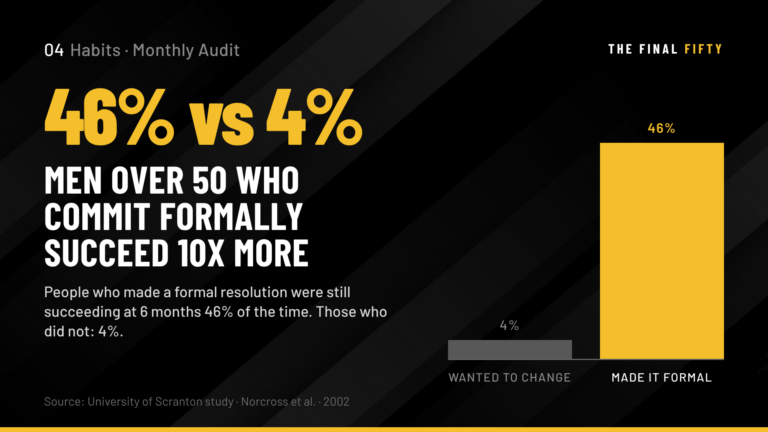
The Monthly Audit for Men Over 50: How to Assess All Three Pillars in One Honest Sitting

The operating system of The Final 50 has three time horizons. The daily standard is the engine: the specific non-negotiable behaviors that execute every day regardless of conditions, producing the compound return that consistency generates. The weekly review and reset is the steering: the reflective practice that examines the week that ended, extracts its lessons,...

Cortisol After 50: Why Chronic Stress Is One of the Most Damaging Forces in a Man’s Body
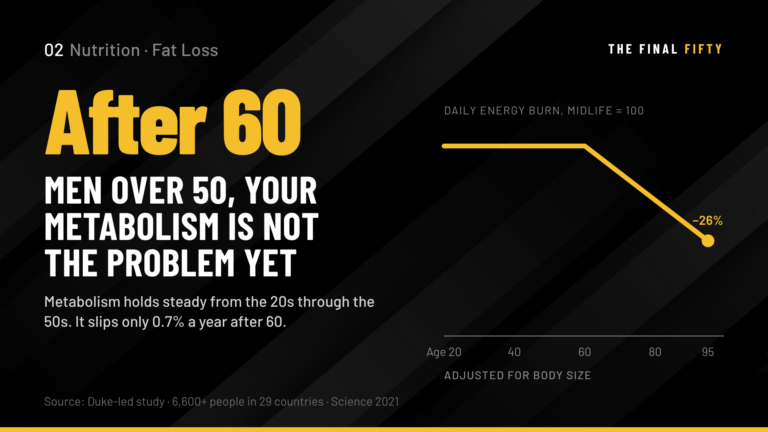
Men over fifty who describe their stress load often use a particular set of words. Manageable. Under control. Not ideal but nothing I cannot handle. The professional demands, the financial pressures, the relational complexity, the physical decline that requires more management than it used to, all of it is framed as the normal background radiation...

Fat Loss After 50: Why It Is Different and Exactly How to Approach It
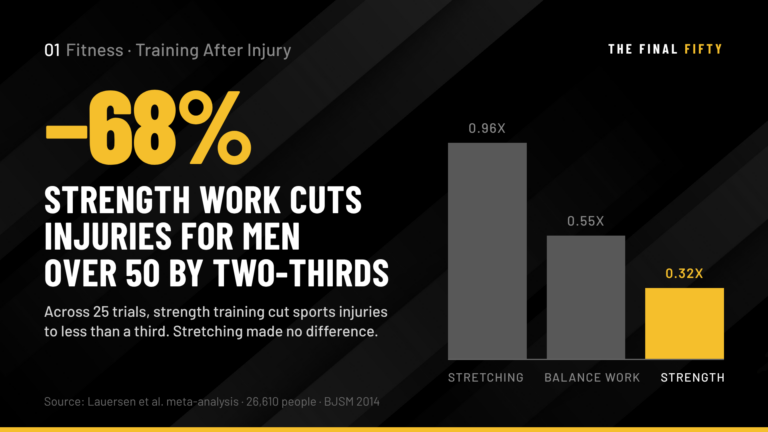
The man over fifty who looks at his body composition and decides to do something about it almost always arrives at the same starting point: the approach that worked before. Reduce calories. Do more cardio. Tighten up the diet. Cut the obvious excesses. This approach worked reasonably well at thirty-five, well enough to produce visible...

Training After Injury for Men Over 50: The Mindset That Makes the Difference
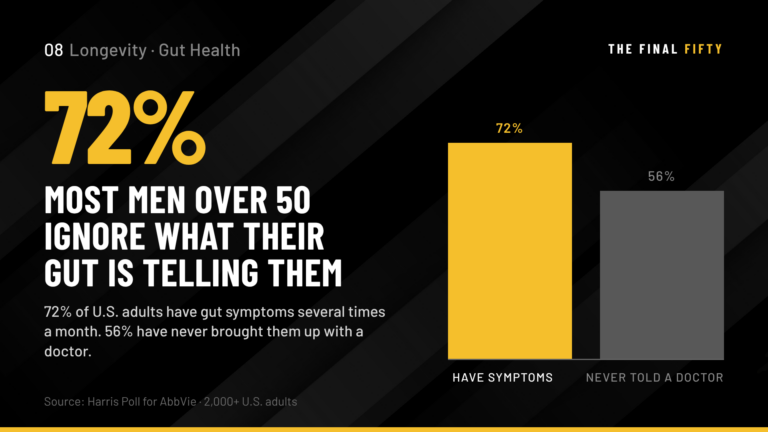
Every man over fifty who has trained seriously for any sustained period has been injured. Not the minor soreness that resolves between sessions, but the actual injury that stops training cold: the torn muscle, the herniated disc, the shoulder that finally refused the load it had been tolerating for years, the knee that delivered its...

Gut Health for Men Over 50: Why the Digestive System Most Men Ignore Controls More Than They Know
The majority of men over 50 who are managing their health seriously have a clear hierarchy of what they are paying attention to. Training. Nutrition. Sleep. Stress. Hormones. Blood markers. The list of variables they are tracking and investing in reflects decades of health and performance research filtered into a practical program. The gut is...

Leadership After 50: How Experience and Judgment Make Men in the Second Half the Leaders Most Organizations Need
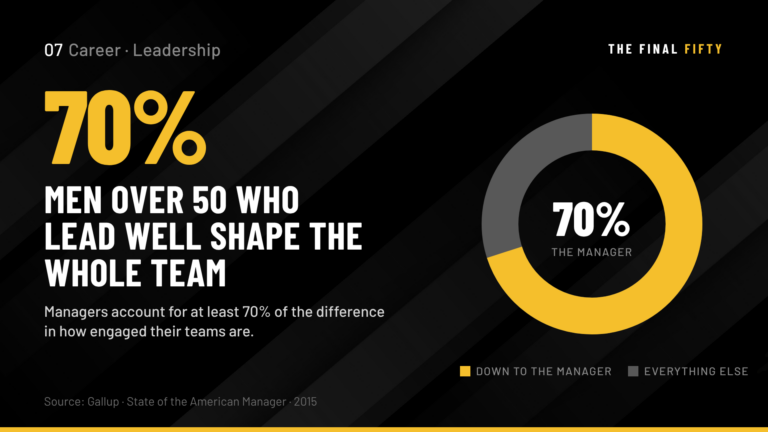
The cultural narrative about leadership and age runs in the same direction as the cultural narrative about entrepreneurship and age: it belongs to the young. The leadership mythology of the technology and innovation economy is populated by figures who disrupted industries before forty, who moved fast and broke things, who embodied the energy and the...

Social Health After 50: Why Your Friendships Are a Longevity Variable, Not Just a Lifestyle Preference
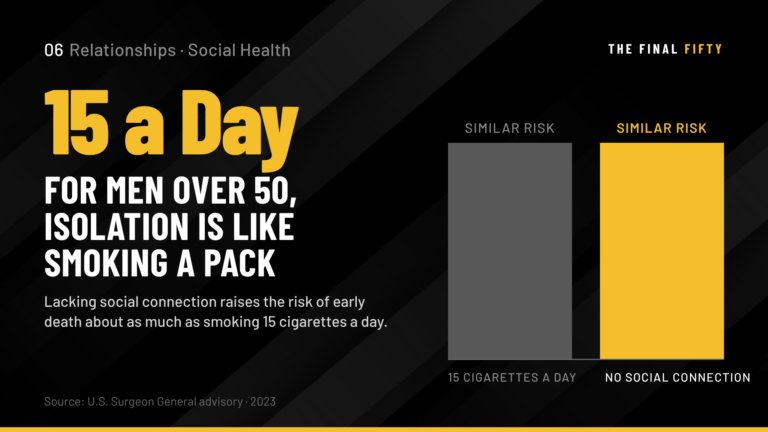
The health variables that men over fifty are most likely to track and invest in are the ones that come with quantifiable targets and visible feedback. Training performance. Body composition. Blood markers. Sleep duration and quality. The daily standard is held, the measurement is taken, the feedback arrives. The investment-to-outcome relationship is visible enough to...

Identity After 50: Why What You Believe About Yourself Is the Most Important Variable in Your Performance
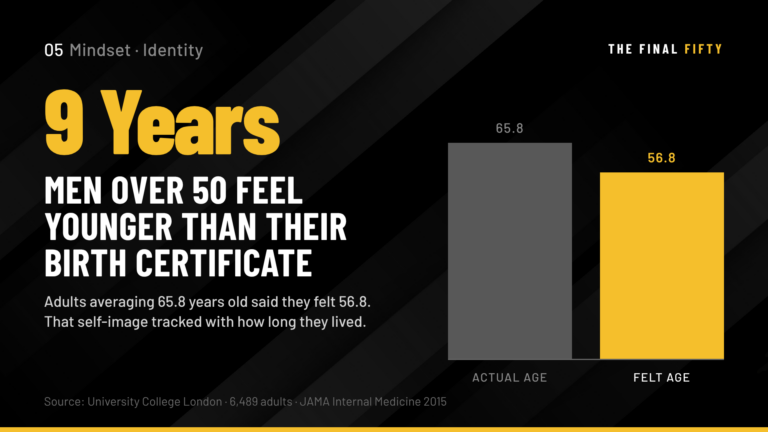
There is a hierarchy of variables that determine a man's health outcomes, performance trajectory, and quality of life in the second half. Most men would organize that hierarchy by placing the visible, measurable inputs at the top: training consistency, nutritional quality, sleep adequacy, stress management. These are the variables that receive the most deliberate attention...

The Weekly Review for Men Over 50: The Single Practice That Keeps Everything on Track
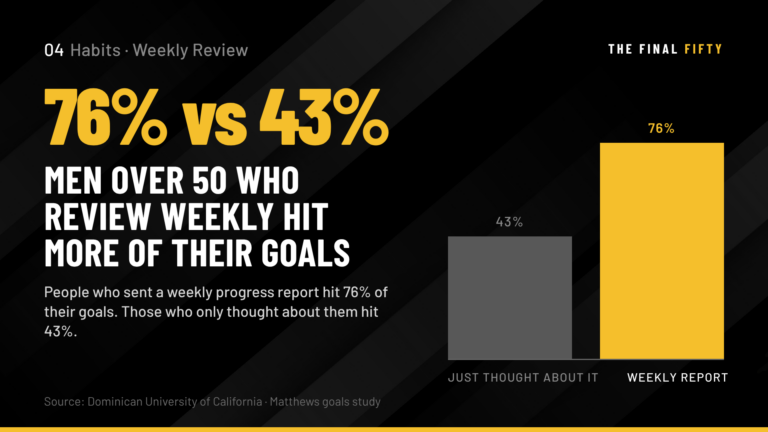
There is a specific failure mode that affects serious men who have built strong daily standards and who hold those standards consistently. It is not the failure to execute. It is the failure to step back from the execution often enough to verify that what is being executed with such discipline is still pointed in...

TRT After 50: What Testosterone Replacement Therapy Is and Who It Is For

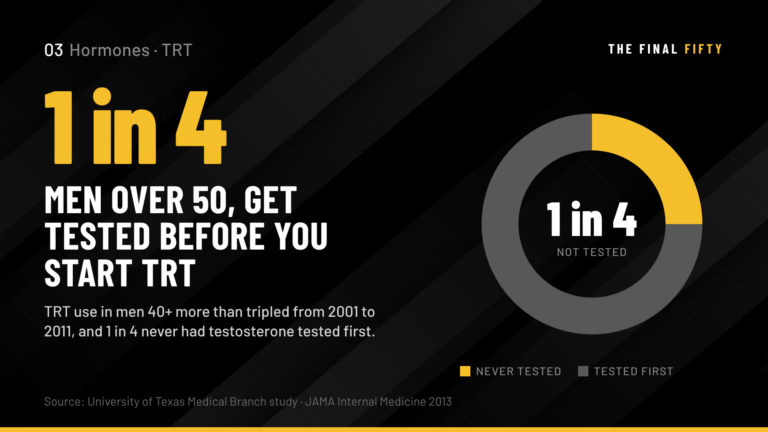
Testosterone replacement therapy sits at the intersection of two cultures that have produced significant noise and insufficient clarity. The medical establishment has been historically cautious about it, shaped by early observational studies that raised cardiovascular concerns, by the complexity of diagnosing the condition it treats, and by legitimate uncertainty about long-term outcomes in a population...