
Declining sexual desire in men over fifty is among the most commonly experienced and least openly discussed health changes of the second half. It is attributed to aging in the same way that fatigue, reduced muscle mass, and declining cognitive sharpness are attributed to aging: as the expected price of the years that have passed, to be accepted rather than investigated and addressed. This attribution is inaccurate in the same way that the fatigue and the muscle loss attributions are inaccurate. They are partially driven by the biology of the second half, but they are also substantially driven by specific, identifiable, and in many cases addressable factors that a man who understands them can directly influence.
Reduced libido is the principal clinical correlate of low testosterone. This designation, from clinical endocrinology, establishes sexual desire as the symptom most specifically and most consistently associated with testosterone deficiency, more so than fatigue, mood changes, or muscle loss, each of which has multiple other potential causes. It also establishes that when a man’s sexual desire has declined meaningfully, testosterone is the first hormonal variable to investigate, not the last.
But testosterone alone does not fully explain why most men over fifty experience declining sexual desire, because libido is not a single-variable outcome. It is the product of a hormonal environment, a vascular status, a psychological state, a relational context, and a medication landscape, all of which contribute to the spontaneous sexual interest and the sexual responsiveness that the word libido describes. A man who identifies the testosterone driver while missing the vascular driver, or who addresses the hormonal dimension while leaving the psychological dimension untouched, will achieve partial restoration at best. The complete picture requires the complete investigation.
The Hormonal Drivers: Testosterone and Estradiol
Testosterone’s role in male libido is well established and operates through a specific mechanism that is worth understanding precisely. Testosterone affects the region of the brain implicated in sexual desire, specifically the hypothalamus and the limbic system, where the steroid acts on androgen receptors to generate the spontaneous sexual thoughts and the motivation toward sexual activity that constitute the experience of libido. When testosterone falls below the individual’s functional threshold, these central nervous system effects are reduced, and the spontaneous sexual interest that was previously automatic becomes less frequent, less intense, or absent.
The mechanism through which testosterone most directly drives libido is, counterintuitively, through its conversion to estradiol. Testosterone’s effects on libido are mediated through its conversion to estradiol at the level of the hypothalamus and limbic system. This finding, established through elegant research in which testosterone and estradiol were independently manipulated in older men, means that the estradiol fraction of the hormonal picture is as important as the testosterone fraction when evaluating the hormonal drivers of libido. The man whose total testosterone is in the normal range but whose estradiol is either too low, because inadequate aromatization is occurring, or too high, because excess aromatization driven by visceral fat is converting too much testosterone to estradiol, will experience libido effects from the estradiol imbalance even when the testosterone number alone appears adequate.
Total and free serum testosterone levels are positively associated with sexual desire, erectile function and sexual activity in older men with unequivocally low testosterone levels and symptoms of sexual dysfunction. The critical word is free: total testosterone measures all testosterone in circulation, but a significant fraction is bound to sex hormone binding globulin and is therefore not bioavailable to the androgen receptors that drive libido. Free testosterone and bioavailable testosterone, the fractions not bound to SHBG, are the measures most directly correlated with the libido outcomes that testosterone is supposed to produce. The man whose total testosterone appears adequate but whose SHBG is elevated, producing a low free testosterone despite a normal total, is experiencing functional testosterone deficiency at the receptor level where libido is generated, without the standard panel revealing it.
The practical implication is that the hormonal investigation of declining libido requires a complete panel: total testosterone, free testosterone, SHBG, and estradiol, all measured together on a morning blood draw when testosterone is at its daily peak. Any single measurement, particularly total testosterone alone, provides an incomplete and potentially misleading picture of the hormonal drivers of libido.
The Vascular Drivers: Blood Flow and Circulatory Health
Erections and the genital arousal response that accompanies libido depend on adequate blood flow to penile tissue. As vascular health declines with age, particularly with conditions like hypertension, diabetes, or high cholesterol, both erectile function and the libido that is connected to it may weaken. The vascular dimension of libido is distinct from the hormonal dimension and requires separate investigation, because the man whose hormones are normal but whose vascular health is compromised will experience libido and sexual function changes that no hormonal intervention will fully address.
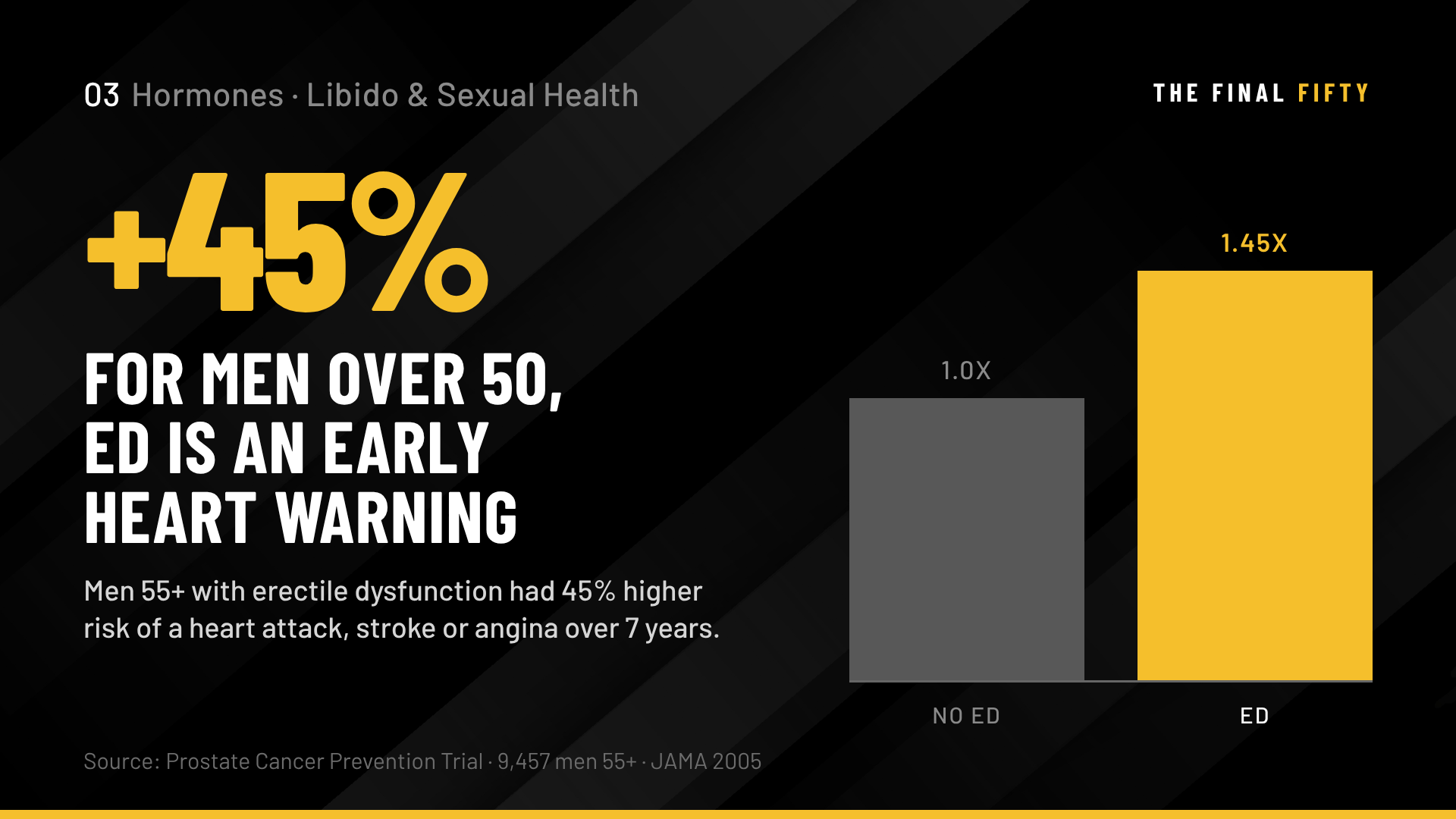
The connection between cardiovascular health and sexual function is mechanistic: the endothelial function that governs blood flow throughout the body, including to the genitalia, is the same function that predicts cardiovascular events when it is compromised. Nitric oxide, the molecule that dilates blood vessels to enable erections and the genital engorgement response, is produced by the endothelium and is reduced by the same endothelial dysfunction that elevates cardiovascular risk. A man whose erectile function has recently declined without a clear hormonal explanation is experiencing a vascular signal that deserves cardiovascular evaluation, not simply a prescription for a phosphodiesterase inhibitor that addresses the symptom without investigating the underlying vascular health.
The lifestyle variables that most directly support vascular health, the aerobic training that improves endothelial function, the anti-inflammatory diet that reduces the oxidative stress that damages the endothelium, the body weight management that reduces the visceral fat that drives the inflammatory and metabolic dysfunction behind endothelial compromise, are simultaneously the lifestyle variables that support sexual function through the vascular pathway. The man whose cardiovascular fitness is declining, whose body composition is moving toward excess visceral fat, and whose inflammatory markers are elevated is building the vascular substrate for declining sexual function independently of whatever his hormones are doing. Both pathways require attention.
The Psychological Drivers: What Happens Inside the Mind
Sexual desire is a central nervous system phenomenon before it is a peripheral one. The spontaneous sexual thoughts, the attraction response, and the motivation to pursue sexual activity all originate in the brain, and the psychological state of the brain powerfully modulates these experiences regardless of what the hormonal and vascular systems are doing.
Stress, anxiety, depression, and relationship concerns can significantly affect libido at any age, but these influences may become more pronounced in the second half. Men over fifty experience stress related to professional transitions, financial pressures, health concerns, and the relational complexity of the second half’s family dynamics. Depression, which affects a significant proportion of men over fifty and which is substantially underdiagnosed in this demographic because the cultural norms around male emotional expression discourage its disclosure, suppresses libido through direct neurobiological mechanisms: the serotonin and dopamine dysregulation of depression directly reduces the motivational salience of sexual activity in the reward circuitry that generates sexual desire.
Performance anxiety deserves specific mention because it operates as a self-reinforcing cycle that many men over fifty enter without recognizing the mechanism. A man who experiences a single episode of erectile difficulty, whether from fatigue, stress, alcohol, or any other transient cause, may develop anxiety about future performance that itself produces the vascular and neurological conditions for erectile difficulty in subsequent encounters. The anxiety activates the sympathetic nervous system, which inhibits the parasympathetic response that erections require, which produces difficulty, which reinforces the anxiety. The man who interprets this cycle as permanent biological decline may withdraw from sexual activity entirely, further reinforcing the avoidance through the loss of the regular sexual engagement that maintains sexual function and desire.
Self-image and body confidence are the third psychological dimension with direct libido implications. The body composition changes of the second half, the increased body fat, the reduced muscle mass, the physical changes that are visible in the mirror, affect how many men feel about themselves as sexual beings. Low body confidence reduces the willingness to engage in sexual activity and can suppress the spontaneous sexual interest that a positive self-image supports. The body composition investment described throughout this platform’s fitness and nutrition content is simultaneously a sexual health investment whose returns include the self-confidence that physical capability and healthy body composition produce.
The Relational Drivers: What Happens Between Two People
Libido does not exist in isolation from the relationship context in which it is expressed. Emotional distance or unresolved conflicts can dull sexual interest over time. This is not a separate psychological problem from the relationship problem. It is the relationship problem manifesting in the sexual dimension.
The man who has been in a long-term relationship for twenty or thirty years may find that the novelty-driven component of desire, which is neurobiologically robust in new relationships and which fades as the relationship matures, has declined substantially. This is a normal developmental trajectory of long-term partnerships, not a pathological loss of attraction to the partner. But it requires deliberate relational investment to sustain the desire that the early relationship’s novelty provided automatically. The research on relationship satisfaction and sexual desire in long-term couples consistently finds that emotional intimacy, genuine communication, and the cultivation of shared experience maintain desire more effectively than any physical intervention when the relational dimension is the primary driver of its decline.
The partner’s sexual health is the second relational dimension that most men over fifty have not fully considered as a driver of their own libido. If a female partner is experiencing menopause-related changes including reduced desire, vaginal dryness, or discomfort during intercourse, these changes affect the couple’s sexual relationship in ways that both partners experience. A man whose partner is struggling with the sexual health changes of menopause may find his own desire affected by the relational dynamics those changes produce, including the partner’s reduced initiation, the modifications to sexual activity that her physical changes require, and the emotional complexity of navigating a changed sexual dynamic in a long-term relationship. The relational approach to this situation, which includes open communication, the partner’s engagement with appropriate medical support for her own symptoms, and the couple’s shared investment in adapting their sexual relationship to the changes both are experiencing, is more likely to produce a positive long-term outcome than either partner managing their individual symptoms while the relational dimension goes unaddressed.
The Medication Drivers: The Pharmaceutical Libido Killers
Medications are among the most common and most consistently overlooked drivers of reduced libido in men over fifty, because the connection between specific medication classes and sexual desire suppression is rarely explained to patients at the time of prescription and is rarely investigated when libido complaints arise in men who are taking multiple medications.
SSRIs and SNRIs, the antidepressant classes most commonly prescribed for depression and anxiety, reliably produce sexual side effects including reduced libido, delayed orgasm, and sometimes anorgasmia in a substantial proportion of patients. The serotonin elevation that makes these medications effective for depression also reduces the dopamine activity in the reward circuitry that generates sexual desire. A man whose libido declined shortly after beginning an antidepressant, or whose libido has been suppressed throughout a period of SSRI or SNRI use, is experiencing a documented medication side effect rather than a hormonal problem. The appropriate response is a conversation with the prescribing physician about dose adjustment, medication switch to a class with lower sexual side effect burden, or adjunctive strategies that preserve the antidepressant benefit while reducing the sexual side effect.
Certain blood pressure medications, particularly beta-blockers and thiazide diuretics, are associated with reduced libido and erectile function in some men. These are not universal effects, but they are well-documented in a proportion of men taking these classes and are frequently not identified as medication-related because neither the patient nor the physician connects the blood pressure management to the sexual health change. Men who experience libido changes after beginning blood pressure medication should raise this explicitly with their physician, because alternative medication classes with lower sexual side effect burden are available for most blood pressure indications.
5-alpha reductase inhibitors, specifically finasteride used for benign prostatic hyperplasia or hair loss and dutasteride used for BPH, block the conversion of testosterone to dihydrotestosterone. DHT is the most potent androgen and plays a significant role in libido, sexual function, and genital sensitivity. A proportion of men taking 5-alpha reductase inhibitors experience persistent sexual side effects including reduced libido, which the FDA now requires as a labeled warning for finasteride. Men taking these medications for hair loss should weigh the sexual health consequences of DHT suppression against the cosmetic benefit of the treatment.
How to Get It Back: The Systematic Approach
The restoration of libido in men over fifty requires the systematic identification of which drivers are present in the individual man’s specific situation, followed by targeted intervention on each identified driver, rather than the single-variable approach that most men and most physicians default to.
The investigation begins with the complete hormonal panel: total testosterone, free testosterone, SHBG, and estradiol, measured on a morning blood draw. If total testosterone is below 300 nanograms per deciliter on two separate morning measurements alongside clear libido symptoms, the conversation about testosterone optimization, including the lifestyle variables that independently support testosterone and the medical management options if lifestyle optimization is insufficient, is the appropriate next step. If total testosterone is in the normal range but free testosterone is low due to elevated SHBG, the investigation shifts to what is driving the SHBG elevation and whether it can be reduced. If estradiol is either below 20 or above 40 picograms per milliliter, the estradiol imbalance becomes a target of its own.
The vascular investigation follows, particularly for men who are also experiencing erectile dysfunction alongside the libido decline. Blood pressure, fasting glucose, lipid panel, and the cardiovascular risk factor management that determines endothelial health provide the vascular picture that complements the hormonal assessment. The man whose cardiovascular risk factors are elevated is building a vascular libido driver alongside any hormonal ones that may be present.
The medication review is the third systematic step, conducted with the prescribing physician: are any current medications on the list of known libido suppressants? If so, are there alternatives with lower sexual side effect burden? This conversation should be specific, naming the medications and the known associations rather than the general question of whether any medications are causing problems, because the physician who does not know the patient is specifically asking about sexual side effects may not identify the relevant connection without the direct question.
The psychological and relational dimensions are addressed simultaneously through the honest conversation with the partner about what each person is experiencing in the sexual relationship, and with a physician or psychologist if performance anxiety, depression, or relationship conflict is a significant contributor. The man who is managing the physical drivers of libido while neglecting the psychological and relational dimensions will achieve partial restoration at best, because libido is generated in the brain in the context of a relationship, and both of those dimensions require investment alongside the hormonal and vascular work.
Lifestyle optimization is the foundation that makes everything else more effective: the body composition management that reduces the visceral fat driving aromatase-mediated testosterone suppression, the resistance training that supports testosterone production and the self-confidence that body composition improvement generates, the sleep protection that is the most directly addressable biological driver of testosterone, the alcohol management that eliminates one of the most potent testosterone suppressors available, and the stress management that reduces the cortisol that competes with and suppresses testosterone production through the pregnenolone pathway. These are not supplementary to the hormonal and vascular investigation. They are the substrate that determines how effective any medical intervention can be.
THE FINAL 50 FRAMEWORK
THE REFRAME
Reduced libido after fifty is not the inevitable price of age. It is a multi-driver outcome with hormonal, vascular, psychological, relational, and pharmacological contributors that each require specific identification and specific intervention. Reduced libido is the principal clinical correlate of testosterone deficiency, making the complete hormonal panel, not just total testosterone but free testosterone, SHBG, and estradiol, the appropriate first investigation. But testosterone alone does not explain the full picture in most men, and addressing only the hormonal dimension while leaving the vascular, psychological, and relational dimensions uninvestigated produces partial restoration at best.
THE STANDARD
The Final 50 man who has experienced meaningful decline in sexual desire treats it as the health signal it is rather than the aging inevitability it is often assumed to be. He requests the complete hormonal panel at his next blood draw. He assesses his cardiovascular risk factors and vascular health. He reviews his current medications for known libido-suppressing effects with his physician. He addresses the lifestyle variables that most directly support testosterone: body composition management, resistance training, sleep protection, alcohol reduction, and stress management. He brings the relational dimension into honest conversation with his partner rather than managing the decline in isolation.
THE PRACTICE
This week, identify which of the five driver categories described in this article most clearly applies to your situation. The hormonal driver: has your free testosterone and estradiol been measured alongside your total testosterone? The vascular driver: are your blood pressure, blood glucose, and cardiovascular risk factors managed at optimal targets? The medication driver: have you reviewed your current medications for documented libido-suppressing effects? The psychological driver: are stress, anxiety, depression, or performance anxiety present and unaddressed? The relational driver: has the sexual health conversation been had honestly with your partner? The driver you have not yet investigated is the one most worth addressing this week.
THE AUDIT
When did your sexual desire last feel like it was operating at the level you consider your baseline? What changed in your life around the time the decline began: a new medication, a significant stressor, a change in sleep, a change in body composition, a change in the relational dynamic? Most men who trace the timeline carefully find a specific correlate to the decline that points toward a specific driver. That correlate is the starting point for the investigation, because the driver that coincided with the decline is the most likely primary driver of the current situation. Name it, investigate it, address it.
THE PROMPT
The brotherhood conversation about libido that most men over fifty have never had is the honest one about what is driving the change each man is experiencing rather than the general acknowledgment that things are different than they used to be. The man who has done the complete investigation, had the hormonal panel, reviewed his medications, addressed the lifestyle variables, and brought the relational dimension into open conversation has navigated the full framework this article describes. His experience, what he investigated, what he found, and what worked, is more valuable to every man in the brotherhood navigating the same situation than any amount of general advice. The brotherhood that can have this conversation honestly is doing something the rest of the male world is not.


