
The nutritional debate that has dominated the past several decades of public health guidance has moved in a single direction: toward plant-centered dietary patterns as the presumed foundation of healthy eating, with animal foods positioned as the component that needs to be reduced, limited, or in some framings eliminated entirely. This direction reflects certain epidemiological associations, a set of values about environmental impact and animal welfare, and the particular methodological limitations of nutritional epidemiology that make population-level food frequency data an imperfect basis for individual dietary recommendations.
For men over fifty who are not managing a public health message but are instead optimizing their own biological performance, hormonal environment, muscle maintenance capacity, and long-term health trajectory, the relevant question is not what the population-level dietary guidance suggests but what the nutrient density, bioavailability, and specific biochemical profile of different food categories actually provides relative to the specific physiological demands of the second half.
On that basis, the case for animal-based nutrition as the foundation of the diet for men over fifty is not a cultural preference or an ideological position. It is a nutritional reality grounded in the specific nutrients that aging male biology requires, the forms in which those nutrients are most efficiently delivered and absorbed, and the cumulative evidence on what dietary patterns produce the physical performance, hormonal function, and health outcomes that matter in the decades ahead.
What Nutrient Density Actually Means
Nutrient density refers to the concentration of micronutrients, vitamins, minerals, and bioactive compounds, relative to the caloric content of a food. It is not simply a measure of how many nutrients a food contains in absolute terms. It is a measure of how efficiently a food delivers those nutrients per unit of energy consumed.
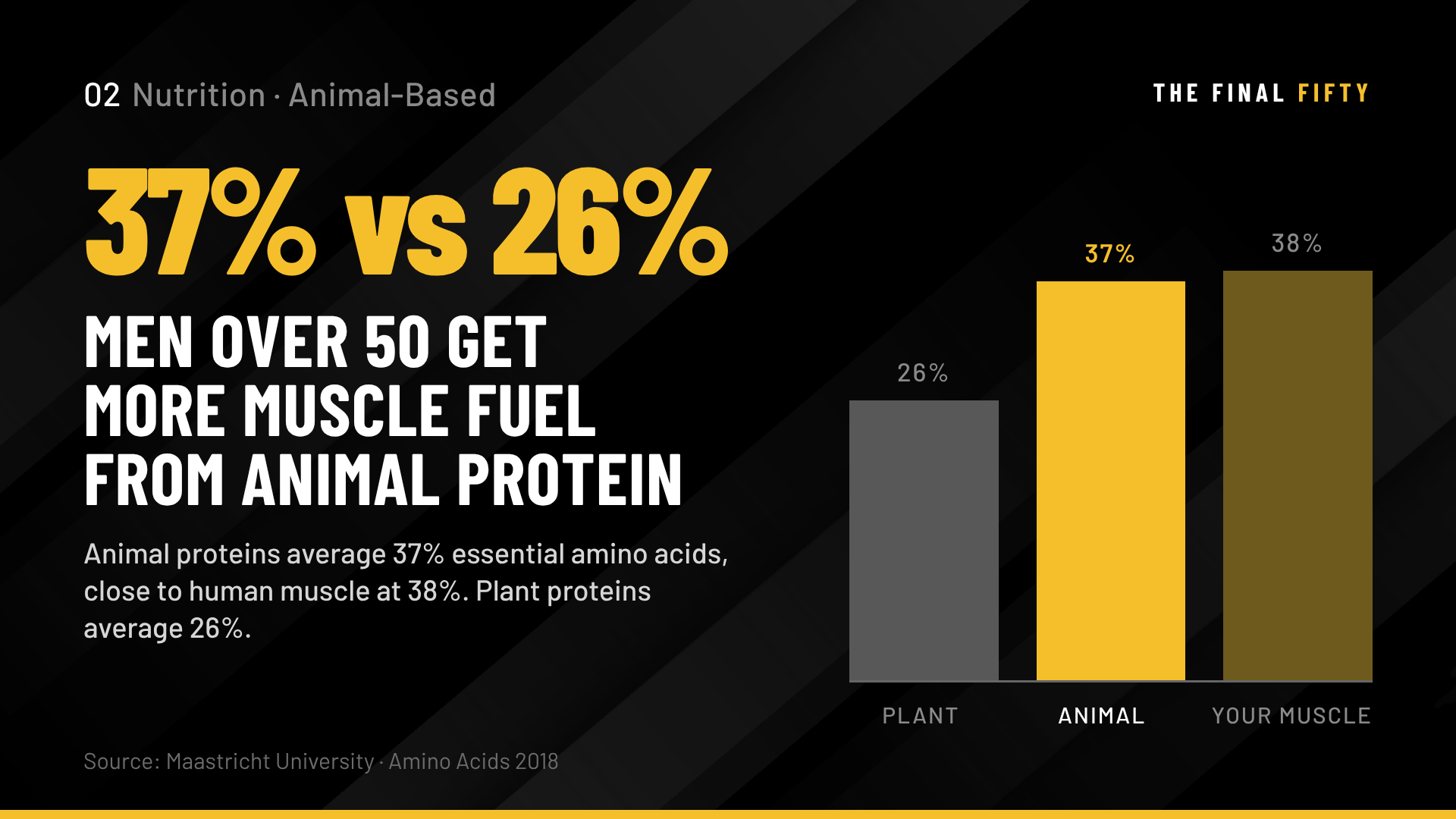
Animal-sourced foods are considered nutrient-dense in that they can be a single source of high-quality protein, vitamins, and minerals. This can be challenging to obtain through consumption of only plant-based foods. The 2020 to 2025 Dietary Guidelines for Americans identified the important role of animal-sourced foods in the diet at every stage of life. The nutrient density advantage of animal foods is not contested in the scientific literature. What is debated is how to weigh that advantage against other considerations. For the man over fifty who is managing his own health deliberately, the nutrient density question is the most relevant one.
Beef liver is the most nutrient-dense food available by most micronutrient analyses. A 100-gram serving provides more than 700 percent of the daily recommended intake for vitamin B12, over 600 percent for copper, over 500 percent for vitamin A in its preformed retinol form, and significant percentages of zinc, selenium, folate, iron, and riboflavin. No plant food comes close to this micronutrient concentration per calorie. The argument for including liver regularly in the diet of men over fifty is not ideological. It is nutritional accounting.
The bioavailability distinction is equally important. Bioavailability refers to the fraction of a nutrient that is actually absorbed and used by the body, not simply the fraction present in the food. Many nutrients are present in plant foods in forms that are less efficiently absorbed than their animal-food equivalents. Heme iron from red meat is absorbed at approximately 15 to 35 percent efficiency. Non-heme iron from plant foods is absorbed at approximately 2 to 20 percent efficiency, with the lower end more characteristic of typical dietary contexts. Zinc from red meat is absorbed at two to three times the efficiency of zinc from legumes and grains due to phytate content in plant foods that binds zinc and inhibits absorption. Vitamin A from animal foods is provided as preformed retinol, directly usable by the body. Vitamin A from plant foods is provided as beta-carotene, a precursor that requires conversion to retinol at a conversion efficiency of approximately 1 to 28 for most adults, meaning plant sources deliver far less vitamin A per unit consumed than animal sources.
These are not arguments against eating plants. They are arguments for understanding what animal foods deliver that plant foods cannot replicate in equivalent form or concentration, and for building a dietary foundation around the category that provides those nutrients most efficiently.
The Specific Nutrients That Men Over 50 Most Need From Animal Foods
The specific nutrient requirements of men over fifty, driven by the hormonal changes, the anabolic resistance, the inflammatory load management, and the cardiovascular risk profile of the second half, map almost precisely onto the nutrients that animal foods provide most abundantly and most bioavailably.
Zinc from red meat and shellfish is the primary mineral input for testosterone production. The Leydig cells in the testes require zinc as a cofactor in the enzymatic processes that synthesize testosterone from cholesterol. Zinc deficiency consistently produces measurable reductions in testosterone. Men over fifty who build their diet around red meat, oysters, and other high-zinc animal foods are providing the mineral foundation that the testosterone synthesis pathway depends on. Plant-based zinc sources exist but deliver the mineral at a fraction of the bioavailability and in amounts that require significantly higher intake to achieve the same absorbed dose.
Cholesterol and dietary fat from animal foods serve as the substrate for steroid hormone synthesis, including testosterone, cortisol, DHEA, and estrogen. Testosterone is synthesized from cholesterol in a multi-step enzymatic process. The dietary patterns that drastically reduce fat and cholesterol intake remove the primary raw material for that synthesis. The research on dietary fat and testosterone is consistent: men eating higher-fat diets, particularly those with adequate saturated fat from animal sources, tend to have higher testosterone than men eating low-fat diets. Zinc, cholesterol, and healthy saturated fats, found in abundance in beef, liver, and eggs, are the foundation of testosterone synthesis.
Creatine is found naturally only in animal foods, with red meat and fish as the primary sources. Creatine plays a direct role in energy availability during high-intensity exercise, supports muscle protein synthesis, and has documented cognitive benefits that become increasingly relevant in the second half of life. Men who do not eat animal foods have significantly lower muscle creatine stores than omnivores, and supplementation is required to achieve comparable levels. The man who eats red meat regularly is obtaining creatine continuously from food rather than needing to supplement it separately.
Vitamin B12 is found only in animal foods and is essential for neurological function, red blood cell production, and DNA synthesis. Deficiency produces neurological damage that can be irreversible if not corrected, and the deficiency develops gradually enough that its symptoms, fatigue, cognitive slowing, and peripheral neuropathy, are commonly attributed to aging rather than to an addressable nutritional gap. B12 deficiency is the most common nutrient deficiency in vegetarian and vegan adults and is entirely preventable through regular consumption of animal foods. Men over fifty who eat eggs, meat, fish, and dairy daily are not at risk of B12 deficiency. Men who do not need to supplement or monitor carefully.
Omega-3 fatty acids in the EPA and DHA form, the forms that produce the anti-inflammatory, cardiovascular, and cognitive benefits attributed to omega-3 intake, are found in meaningful concentrations only in fatty fish, shellfish, and to a lesser extent grass-fed beef. The plant sources of omega-3, flaxseed, chia, and walnuts, provide ALA, a precursor that the body converts to EPA and DHA at a rate of less than five percent for most individuals. For a man managing his inflammatory load, his cardiovascular risk, and his cognitive health in the second half, the omega-3 that matters is the EPA and DHA from animal sources, not the ALA from plant sources that barely converts to either.
The Sourcing Question: Not All Animal Foods Are Equal
The animal-based nutritional framework is not a license to eat any animal food indiscriminately. The nutritional quality of animal foods varies significantly based on how the animals were raised, what they were fed, and how the food was processed.
Grass-fed and grass-finished beef provides a substantially different nutritional profile than grain-fed conventional beef in the dimensions most relevant to men over fifty. The omega-6 to omega-3 ratio of grass-fed beef is approximately 1.5 to 1 compared to grain-fed beef’s approximately 7.5 to 1. Grass-fed beef provides two to three times more conjugated linoleic acid, a fatty acid with anti-inflammatory and body composition benefits, and significantly more vitamin E and other antioxidants than grain-fed equivalents. The man who builds his red meat consumption around grass-fed sources is not eating the same food as the man eating conventional grain-fed beef from a nutritional standpoint. The distinction matters and justifies the sourcing investment.
Pasture-raised eggs provide a superior nutritional profile compared to conventional eggs, with higher omega-3 content, more vitamins A, D, and E, and higher antioxidant levels. The egg from a chicken that ranged freely and ate its natural varied diet is a nutritionally different product from the egg of a conventionally raised bird. Both are nutritionally valuable. The pasture-raised version is meaningfully better on the dimensions that matter most for men over fifty managing their inflammatory and hormonal health.
Wild-caught fatty fish provide the EPA and DHA that are among the most powerful dietary tools available for systemic inflammation reduction and cardiovascular protection. Farmed salmon can provide reasonable omega-3 levels depending on feed, but wild-caught salmon and sardines consistently provide the superior omega-3 profile alongside lower inflammatory fat ratios. Canned wild salmon and sardines are among the most cost-effective high-value protein and omega-3 sources available, requiring no preparation and providing the full nutritional benefit of the wild-caught category.
Organ meats from quality sources represent the most nutrient-dense food available in the human diet, and they are the category most underutilized by men in the second half of their lives primarily due to cultural unfamiliarity rather than nutritional logic. Beef liver, heart, kidney, and tongue from grass-fed animals provide micronutrient concentrations that no other food source replicates. A man who includes liver once or twice per week is not supplementing his diet. He is accessing the most nutrient-dense food category available and delivering the micronutrient foundation that supports testosterone production, immune function, energy metabolism, and cognitive health simultaneously.
What an Animal-Based Foundation Actually Looks Like in Practice
The animal-based nutritional foundation for men over fifty is not a dogmatic elimination of all plant foods. It is the building of a dietary structure in which high-quality animal foods provide the primary protein, the most critical micronutrients, and the hormonal substrate that the second half demands, with plant foods playing a complementary role in the parts of the nutritional picture that animal foods do not fully address.
The practical structure includes quality animal protein at every meal, at sufficient doses to clear the leucine threshold discussed in detail in the protein articles in this series. It includes fatty fish at minimum twice weekly for omega-3 delivery. It includes grass-fed red meat multiple times per week for zinc, creatine, iron, B vitamins, and saturated fat that supports hormone synthesis. It includes eggs daily or near-daily for complete protein, choline, and the nutrient package that makes them one of the most comprehensively nutritious foods available. It includes organ meats, particularly liver, at least once weekly for the micronutrient concentration that no supplement stack replicates efficiently. It uses animal fats, butter, tallow, and lard from quality sources for cooking, providing the stable heat-resistant fats that do not oxidize into inflammatory compounds the way seed oils do at cooking temperatures.
The carnivore diet, an exclusively animal-based approach, has gained attention and produced documented improvements in metabolic markers, inflammatory status, and body composition in a number of reported cases and exploratory studies. The carnivore diet has been claimed to be associated with numerous health benefits, including weight reduction, self-reported improvements in physical and cognitive performance, and a reported reduction in the risk of developing chronic diseases such as diabetes, dyslipidemia, hypertension, and gastrointestinal disorders. The research base for exclusive animal-only diets remains early, and the micronutrient picture of a strictly carnivore approach requires careful attention to organ meat inclusion to achieve adequate coverage. The Final 50 approach does not prescribe total plant elimination. It prescribes animal foods as the foundation of a performance nutrition strategy, built around quality, sourcing, and the specific biological demands of the second half.
That foundation is what the physiology of men over fifty actually requires. The nutrients it provides are the ones the science identifies as most critical for hormonal health, muscle maintenance, inflammation management, and cognitive performance across the decades ahead. Building the diet around it is not a dietary trend. It is nutritional alignment with biological need.
THE FINAL 50 FRAMEWORK
THE REFRAME
Animal foods are not a compromise in an otherwise plant-centered diet. They are the nutritional foundation that delivers the most bioavailable forms of the specific nutrients that men over fifty most critically need: zinc for testosterone synthesis, preformed vitamin A and B12 from liver, EPA and DHA from fatty fish, creatine from red meat, and the dietary cholesterol and saturated fat that the steroid hormone synthesis pathway requires. Treating them as optional or secondary is treating the most nutrient-dense foods available as if they were a discretionary addition to a plant-centered base. The relationship should be inverted.
THE STANDARD
The Final 50 man builds his diet around high-quality animal foods as the foundation. Grass-fed red meat multiple times per week. Wild-caught fatty fish at minimum twice weekly. Pasture-raised eggs daily. Organ meats, primarily liver, at least once per week. Animal fats from quality sources for cooking. This is the nutritional structure that delivers the micronutrients the second half requires in the forms the body absorbs most efficiently. Plant foods complement this foundation and contribute to the overall nutritional picture. They do not replace it.
THE PRACTICE
This week, add one organ meat meal to your eating plan if you do not currently include one. Beef liver is the highest-value starting point: a 100-gram serving, roughly three and a half ounces, provides the micronutrient equivalent of a comprehensive supplement stack in a single meal. If the taste of liver plain is a barrier, combine it with ground beef at a ratio of one part liver to three or four parts beef, mixed together before cooking. The liver flavor is essentially imperceptible at that ratio and the nutritional contribution is fully preserved. Cook it once. Establish the habit. It is the highest-value nutritional addition available to most men who are not currently eating it.
THE AUDIT
How often do you eat grass-fed red meat? Wild-caught fatty fish? Organ meats? Pasture-raised eggs? If the honest answer is that your current animal food consumption is primarily conventional supermarket chicken and ground beef with no organ meats and infrequent fatty fish, you are eating animal foods but not accessing the full nutritional value that the animal-based foundation provides. The quality of the sourcing and the variety of the animal foods consumed are both variables that change the nutritional outcome. Audit both honestly.
THE PROMPT
The men in your brotherhood are each somewhere on the animal-based nutrition spectrum, and most of them have never discussed the sourcing, variety, and organ meat question with each other. Who in your circle has built the most nutrient-dense version of this dietary foundation? Who is eating liver regularly, sourcing grass-fed meat consistently, and hitting fatty fish twice a week? That conversation, held with specificity about what each man is actually eating, produces the accountability and the practical knowledge that changes what gets added to the shopping list.


