
The conversation about brain health in the second half has historically been organized around two assumptions that the research has now comprehensively challenged. The first assumption is that cognitive decline is primarily genetic, driven by inherited risk that individuals cannot meaningfully influence regardless of what they do. The second is that the window for meaningful intervention is after symptoms appear, at which point the trajectory can perhaps be slowed but not fundamentally altered.
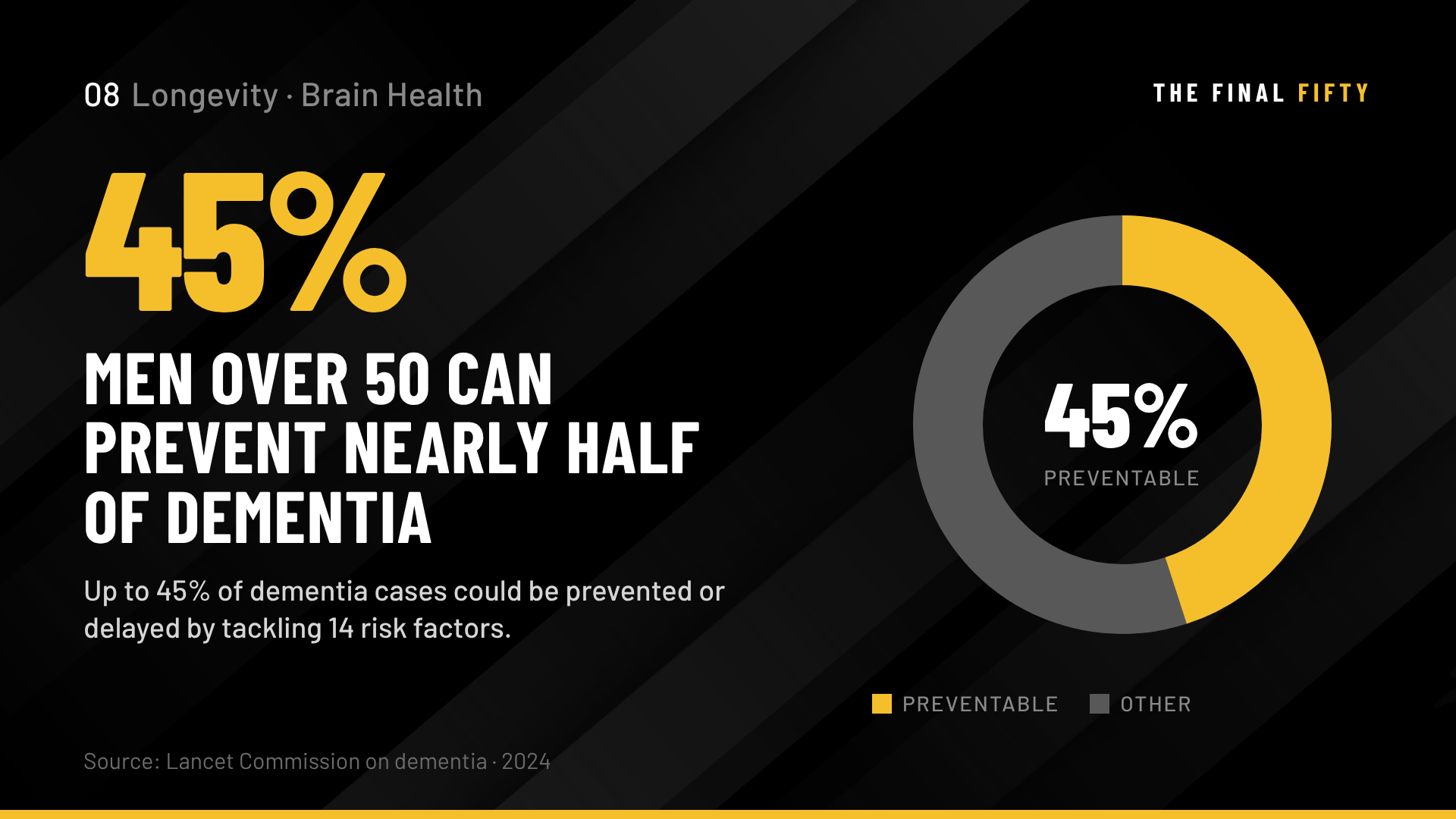
Neither assumption is supported by the current evidence base. The 2024 Lancet Commission on Dementia Prevention, Intervention, and Care, the most comprehensive ongoing scientific review of dementia risk and prevention, identified 14 modifiable risk factors that collectively account for approximately 45 percent of global dementia cases. Nearly half of all dementia cases worldwide are potentially preventable by addressing factors that individuals can influence through deliberate action taken across the lifespan.
The brain is not a passive organ waiting to decline. It is an active biological system that responds to specific inputs across decades in ways that either build cognitive reserve or deplete it. The inputs that build it are specific and actionable. The inputs that deplete it are equally specific and, for many men over fifty, actively present in their current lifestyle without their awareness of the cognitive cost.
This article addresses the research on what those inputs are, what the evidence says about each one, and what a man over fifty who is serious about his cognitive longevity needs to be doing right now rather than waiting for the symptom threshold that no longer represents the optimal intervention point.
The Lancet Framework: 14 Factors That Together Explain 45 Percent
The 2024 Lancet Commission’s finding that 45 percent of dementia cases are potentially preventable by addressing 14 modifiable risk factors is among the most consequential findings in the history of cognitive aging research. It converts the brain health conversation from a genetic fatalism story into a lifestyle and medical management story, one in which individual action taken consistently over decades can shift outcomes in a meaningful direction.
The 14 factors span the lifespan and operate through different mechanisms at different stages. The ones most relevant to men in their fifties, when the midlife inputs that shape late-life cognitive outcomes are still being set, are specific and actionable. Hearing loss and high LDL cholesterol are tied as the two largest individual contributors at approximately 7 percent population attributable fraction each. This means that hearing loss alone, more than any other single modifiable factor, is responsible for a greater proportion of dementia cases than physical inactivity, smoking, obesity, or depression individually. Most men over fifty have had their cholesterol checked. Most have not had a comprehensive hearing assessment in years. The hearing loss that most men are not treating is the single largest modifiable dementia risk factor available to address.
Physical inactivity, hypertension, obesity, smoking, depression, social isolation, excessive alcohol consumption, traumatic brain injury, diabetes, air pollution, low early-life education, and untreated vision loss complete the list. No single factor dominates. Most people who develop dementia have been exposed to several of these risks simultaneously. Addressing even three or four of them reduces cumulative exposure substantially. The actionable cluster for most men over fifty: get a hearing test and address any loss with hearing aids, have LDL and blood pressure checked and managed to optimal rather than reference range targets, sustain regular physical activity with particular emphasis on aerobic exercise, treat depression rather than tolerating it, and invest in social connection with the same seriousness given to physical health.
The US POINTER trial, the largest multidomain lifestyle randomized controlled trial conducted in this age band, found that a structured two-year lifestyle intervention in 2,111 older adults at risk of cognitive decline improved global cognition more than self-guided lifestyle change. The intervention focused on physical exercise, nutrition, cognitive challenge, and social engagement, along with cardiovascular risk factor management. The finding replicates the Finnish GERIATRIC Intervention Study to Prevent Cognitive Impairment and Disability result and establishes that structured, deliberate, multi-domain lifestyle investment produces better cognitive outcomes than the same individual knowing what he should do and trying to do it without structure. As yet, no pharmacological treatment options can rival this lifestyle intervention effect.
Exercise: The Strongest Single-Intervention Evidence
Of all the modifiable factors in the Lancet framework, physical exercise has the strongest single-intervention evidence base for cognitive protection, and the mechanism is specific enough to be stated in measurable biological terms.
Twelve months of moderate aerobic activity, specifically walking three times per week, increased anterior hippocampal volume by approximately 2 percent in older adults, effectively reversing one to two years of age-related shrinkage. The hippocampus is the brain region most directly involved in memory formation and most vulnerable to early Alzheimer’s pathology. The finding that aerobic exercise produces measurable structural growth in precisely the region that age and Alzheimer’s disease most threaten establishes exercise as a brain health intervention at the structural level, not simply a behavioral correlation with better cognitive outcomes.
The mechanism is BDNF: brain-derived neurotrophic factor, the protein that promotes the growth and maintenance of neurons and the formation of new synaptic connections. Aerobic exercise is one of the most potent known stimuli for BDNF production. The hippocampal neurogenesis that aerobic exercise supports is not merely the maintenance of existing neural tissue. It is the active creation of new neural connections and new neurons in an adult brain, a process that was once believed to stop at childhood and that the research of the past two decades has established continues throughout the adult lifespan in proportion to the demands placed on the brain.
Resistance training adds a distinct and complementary dimension to the exercise-cognition relationship. Resistance training improved global cognition and executive function in older adults, with effect sizes in the small to moderate range for adults over 50. The combination of aerobic exercise for hippocampal preservation and resistance training for executive function and processing speed produces the most comprehensive cognitive protection available through exercise, and both are already components of the physical training program that this platform describes throughout the fitness pillar. The man who is training consistently for his physical performance is simultaneously running the most effective cognitive protection program the research supports.
Sleep: The Brain’s Maintenance Window
Sleep is not rest. It is the most active period available for the specific biological maintenance processes that the brain requires to remain healthy across the second half: the clearance of metabolic waste products including amyloid beta and tau proteins, the consolidation of memories from short-term to long-term storage, the regulation of the inflammatory signaling that chronic wakefulness elevates, and the restoration of the neurotransmitter balance that cognitive function depends on.
The glymphatic system, the brain’s waste clearance mechanism, operates primarily during slow-wave deep sleep. During deep sleep, brain cells shrink by approximately 60 percent, allowing cerebrospinal fluid to flow through the interstitial space and wash out the metabolic byproducts of the previous day’s neural activity. Amyloid beta, the protein that accumulates in Alzheimer’s plaques, is among the primary targets of glymphatic clearance. The man who is consistently sleeping fewer than seven hours is not simply accumulating a fatigue debt. He is reducing the glymphatic clearance time that the brain’s amyloid management depends on, across every night of insufficient sleep, in a cumulative fashion that the research associates with elevated amyloid burden over time.
Chronic sleep deprivation also elevates cortisol, which the previous articles in this series established produces direct hippocampal damage through the cortisol receptor concentration in hippocampal tissue. The man who sleeps poorly is experiencing both reduced amyloid clearance and elevated hippocampal cortisol exposure simultaneously, a combination that the cognitive aging research identifies as one of the most directly damaging conditions available for long-term brain health. Sleep protection is not a lifestyle recommendation in the brain health context. It is the most direct cognitive maintenance intervention available, and it is available every night.
Hearing: The Most Overlooked Modifiable Factor
The Lancet Commission’s identification of hearing loss as tied for the largest individual modifiable risk factor for dementia, at approximately 7 percent of total dementia cases attributable to untreated hearing loss, represents a public health finding that most men over fifty have not acted on because most men over fifty have not been told about it in the clinical context that would make it actionable.
Hearing intervention reduced cognitive decline by approximately 48 percent over three years in older adults at high risk of cognitive decline, according to the ACHIEVE trial. The mechanism through which hearing loss drives cognitive decline operates through multiple pathways. Cognitive load: the brain of a man with untreated hearing loss must devote significantly more cognitive resource to decoding speech and auditory signals, resource that would otherwise be available for higher-order cognitive functions. Social isolation: hearing loss reduces the quality and the frequency of social interaction, and social isolation is itself one of the 14 Lancet risk factors. Reduced auditory stimulation: the auditory cortex and the brain regions it connects to receive less activation with reduced auditory input, reducing the cognitive engagement that social and environmental interaction provides.
Hearing aids address all three pathways simultaneously. A man who gets a hearing assessment, discovers the hearing loss that the research suggests is common in men over fifty, and begins using hearing aids is addressing the largest single modifiable dementia risk factor available to him at a biological cost of essentially zero. The most actionable brain health intervention for many men over fifty is not a training change or a dietary adjustment. It is a hearing assessment followed by the treatment of any loss that assessment reveals.
Nutrition: Inflammation as the Cognitive Threat
The nutritional dimension of brain health protection converges with the anti-inflammatory dietary pattern described throughout this platform’s nutrition pillar. The mechanisms through which dietary inputs affect brain health operate primarily through inflammatory pathways: the gut-brain axis and the systemic inflammation that dietary inputs either promote or reduce, the vascular health that supports cerebral blood flow, and the metabolic health that determines insulin sensitivity in the brain.
The brain is the most metabolically demanding organ in the body by weight, consuming approximately 20 percent of total energy despite comprising only 2 percent of body mass. It is profoundly sensitive to the quality of its fuel supply and to the inflammatory environment that dietary inputs create. Processed foods that drive systemic inflammation, ultra-processed carbohydrates that impair insulin sensitivity, and seed oils with high omega-6 to omega-3 ratios that promote neuroinflammation all create conditions in which the brain’s maintenance and repair processes operate under chronic inflammatory burden that accumulates across decades.
The dietary pattern most consistently associated with cognitive protection in the research literature emphasizes fatty fish for DHA, the omega-3 fatty acid that is the primary structural component of neuronal cell membranes and that the brain cannot synthesize in adequate amounts without dietary provision. The animal-based dietary foundation described throughout this platform’s nutrition articles, particularly the twice-weekly fatty fish standard and the emphasis on unprocessed whole animal foods, is the nutritional pattern that supports brain health through the mechanisms the research identifies.
Vascular health is the second nutritional dimension with direct cognitive consequences. High LDL cholesterol’s presence among the Lancet risk factors at the same magnitude as hearing loss reflects the vascular pathway through which poor lipid management damages cognitive function: small vessel disease driven by atherosclerosis that reduces cerebral blood flow, particularly in the white matter tracts that connect brain regions and that are responsible for the processing speed and executive function that decline earliest in the cognitive aging trajectory.
Cognitive Challenge: The Use-It Principle Applied to the Brain
The brain that is not challenged does not remain at its current level of function. The White-Fairhurst principle described in the mental performance articles of this series, that all performance trends toward steady state after a period of uplift and then declines without new challenge, applies to the brain with the same force it applies to physical and professional performance.
Cognitive reserve is the brain’s capacity to function effectively despite the structural changes that aging and pathology introduce. It is built through the accumulation of novel learning experiences, educational engagement, complex professional demands, and social interactions that require sophisticated cognitive processing. The nun study and taxi driver research demonstrate that interventions introducing novel learning experiences and the acquisition of new skills provide a more robust stimulus for neuroplasticity than the reinforcement of familiar knowledge and skills already acquired.
For the man over fifty whose professional role has become largely familiar, whose social interactions occur primarily within established patterns, and whose intellectual engagement is primarily the consumption of information rather than the acquisition of new capability, the cognitive challenge dimension is the one most likely to be insufficiently addressed. The specific interventions that build cognitive reserve most effectively are those that require learning in unfamiliar domains: a new language, a new musical instrument, a new professional discipline, a new physical skill. Not the deepening of existing expertise, which is valuable for performance but provides less neuroplasticity stimulus than the unfamiliar. Not passive consumption of information, which is less demanding than the active construction of new knowledge. The specific challenge, in a domain that requires the construction of new neural pathways, is the cognitive input that builds the reserve that protects against late-life decline.
The Integrated Picture: Why Now Matters
The reason the article title specifies right now is grounded in the research on when cognitive interventions produce their maximum effect. The inputs that most powerfully shape late-life cognitive outcomes are not the inputs of the late life period. They are the inputs of the midlife period, the fifties and sixties, when the brain’s structural trajectory is still being set and when the modifiable risk factors are still in their window of maximum leverage.
Addressing hearing loss, managing LDL and blood pressure, sustaining regular aerobic exercise, protecting sleep, reducing inflammatory dietary inputs, and investing in cognitive challenge during the midlife period produces larger reductions in dementia risk than the same interventions initiated after cognitive symptoms have appeared. The 2024 Lancet Commission’s framing of the 14 risk factors across the life course specifically identifies midlife as the period when many of the most consequential factors, hearing loss, hypertension, LDL cholesterol, physical inactivity, and obesity, are operating at their maximum influence on the late-life cognitive trajectory.
The man at fifty-five who addresses these factors now is investing in the cognitive function he will have at seventy-five. The man at fifty-five who does not address them is not maintaining the status quo. He is accumulating the risk factor exposure across the years between now and then that the Lancet framework establishes as the primary determinant of whether he is among the 45 percent whose dementia was preventable or among the 55 percent whose risk factors were not meaningfully in his control. The timing of the intervention matters. Right now is both the accurate answer to when and the optimal window for maximum leverage.
THE FINAL 50 FRAMEWORK
THE REFRAME
The brain is not a passive organ waiting to decline. It is an active biological system that responds to specific inputs across decades in ways that either build cognitive reserve or deplete it. The 2024 Lancet Commission identified 14 modifiable risk factors that account for 45 percent of global dementia cases, the majority of which are addressable by men over fifty right now through specific lifestyle and medical management decisions. As yet, no pharmacological treatment options can rival the lifestyle intervention effect demonstrated in the US POINTER trial. The most powerful brain health protection available is the one a man is already in position to deliver, if he does it deliberately and consistently starting now.
THE STANDARD
The Final 50 man treats brain health as a first-tier health priority receiving the same deliberate investment as cardiovascular health, hormonal health, and body composition. He has had a comprehensive hearing assessment and has addressed any loss with hearing aids. He knows his LDL cholesterol and blood pressure and manages both to optimal rather than reference range targets. He protects seven to nine hours of sleep as the brain’s primary maintenance window. He trains aerobically in the Zone 2 range for the hippocampal neuroplasticity that aerobic exercise uniquely provides. He pursues at least one area of novel learning every year that requires the construction of new neural pathways rather than the deepening of familiar ones. He monitors for depression as a cognitive risk factor and addresses it rather than tolerating it.
THE PRACTICE
This week, run the Lancet 14 against your current life honestly. Get a hearing test if you have not had one in the past two years. Check your most recent LDL and blood pressure results against optimal targets rather than reference ranges. Count your average nightly sleep hours against the seven to nine-hour standard. Identify whether your current exercise program includes sufficient aerobic work to support hippocampal preservation. Identify whether your current intellectual engagement includes anything that is novel, requiring new learning rather than the application of existing knowledge. Each gap you identify in that honest assessment is a specific, evidence-based brain health intervention opportunity available to you this week.
THE AUDIT
Of the 14 Lancet modifiable risk factors, how many are currently present in your life at a level that represents a meaningful risk? Hearing loss, elevated LDL, elevated blood pressure, physical inactivity, excess body weight, depression, social isolation, poor sleep, excessive alcohol, smoking, diabetes, and the two newest additions of vision loss and high LDL are the list. Most men over fifty will find two to four of these present at some level. Each one addressed reduces cumulative risk exposure in proportion to the magnitude of the exposure and the consistency of the management. The audit tells a man which specific interventions offer the largest return on the brain health investment he has available to make.
THE PROMPT
The brain health conversation that most men in the second half have never had with their brotherhood is the specific one: which of the 14 Lancet factors each man has addressed and which he has not, what his most recent cognitive biomarkers show if he has had them assessed, and what specific brain health investment he is making beyond the general health behaviors that benefit every system. The man who has done the hearing assessment, the lipid optimization, the aerobic training specifically for hippocampal health, and the novel learning challenge has something specific and actionable to share with every man in the brotherhood who has not yet made those investments. That specific knowledge transfer is one of the most valuable contributions the brotherhood can make to each member’s long-haul cognitive health.


